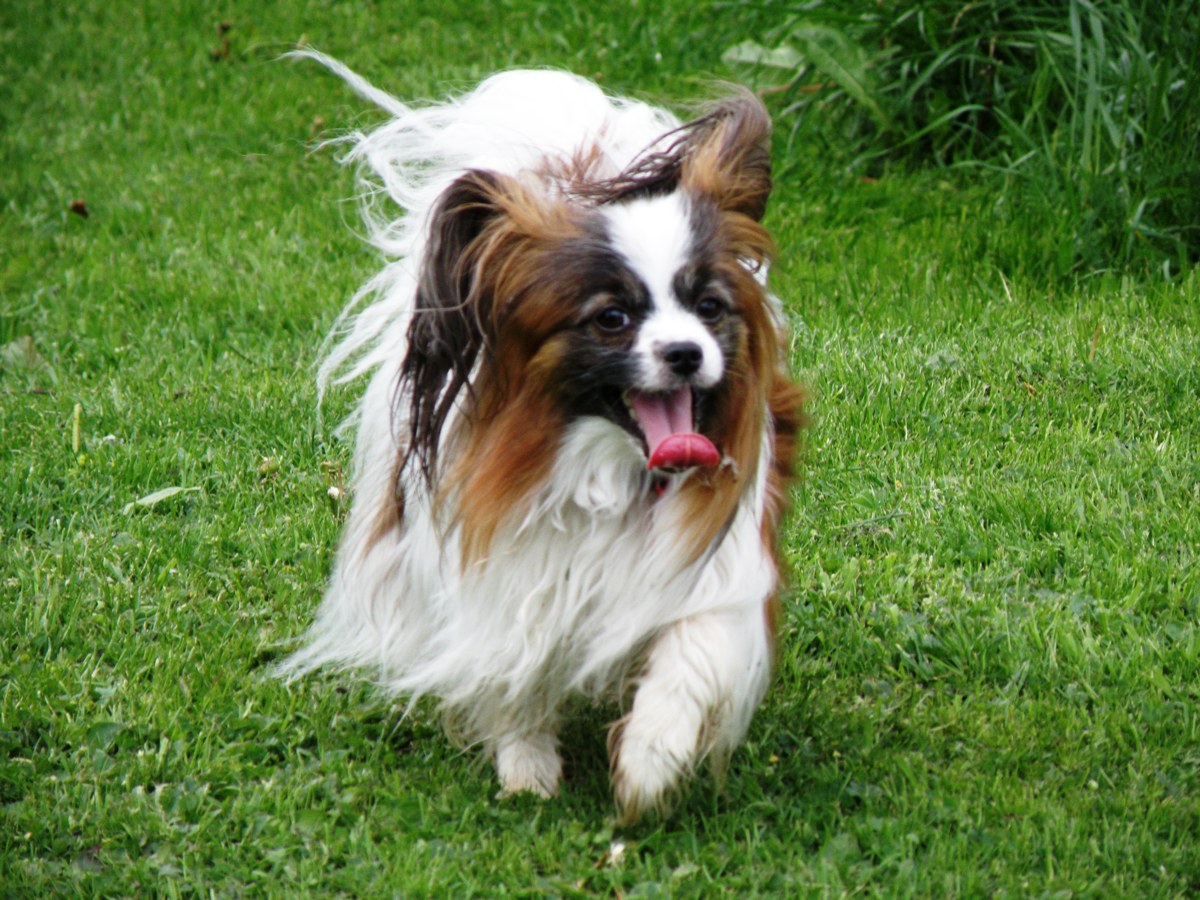
The Papillon's feathered ears may catch your eye first, but this little dog's enthusiasm for learning is just as important. A household looking for a small companion to train, explore with and include in everyday activities may find the breed appealing. Someone expecting a decorative dog that needs little engagement may be surprised.
A toy dog, not a toy
The Dogs Australia standard gives an ideal shoulder height of approximately 20.3–28 cm. It recognises both erect ears, associated with the butterfly name Papillon, and the dropped-ear Phalene variety. These are breed-standard descriptions rather than guarantees about a particular puppy's adult measurements.
The Royal Kennel Club profile notes the breed's intelligence and participation in obedience and agility. That does not mean every Papillon wants competition. Sniffing, playing and learning useful household skills can be rewarding activities in their own right.
Exercise and an outlet for curiosity
Offer daily walks matched to age, fitness and weather, alongside brief training games. Teach recall, loose-lead walking and settling as carefully as you would for a larger breed. For a dog interested in sports, start with foundation skills under a suitable instructor rather than improvised jumps. Ask your vet about readiness before adding strenuous activity.
A practical game is to reward the dog for stepping onto a mat, then gradually add calm time there. Another is a simple search for an appropriate toy. Keep sessions easy enough to succeed and finish before the dog becomes tired or frustrated. Rest is part of a good routine, not a failure to provide stimulation.
Coat care and everyday handling
The fine, flowing coat has no undercoat in the Australian standard, but still needs regular attention. Carefully comb the ear fringes, legs and other areas that tangle. Introduce brushing in short sessions, reward cooperation and ask for help rather than pulling through a painful mat.
Make dental care, nail checks and gentle handling part of the routine. A small dog's size can make it easy for people to overlook its wish to move away. Let the dog approach visitors and provide a quiet retreat. Supervise children and prevent chasing, grabbing or being passed from person to person.
Health screening is more than a puppy check
The Royal Kennel Club lists DNA screening for pap-PRA, with further testing guidance covering NAD, von Willebrand disease and eye examination. These are UK recommendations, not a claim about compulsory Australian testing. Discuss their relevance with an Australian breeder and your veterinarian, and ask to see the parents' records. The American Kennel Club also identifies kneecap assessment among breed health considerations.
No certificate can guarantee lifelong health. Ask what the results mean, which conditions were not assessed and what support is available after the dog comes home.
The right home
A Papillon may appeal to an owner who enjoys teaching and daily interaction but needs a compact companion. Plan toilet access, safe outdoor spaces and help during long absences. For families, the key is considerate handling rather than simply the children's ages. Meet the individual dog: curiosity, confidence and tolerance vary within any breed.