

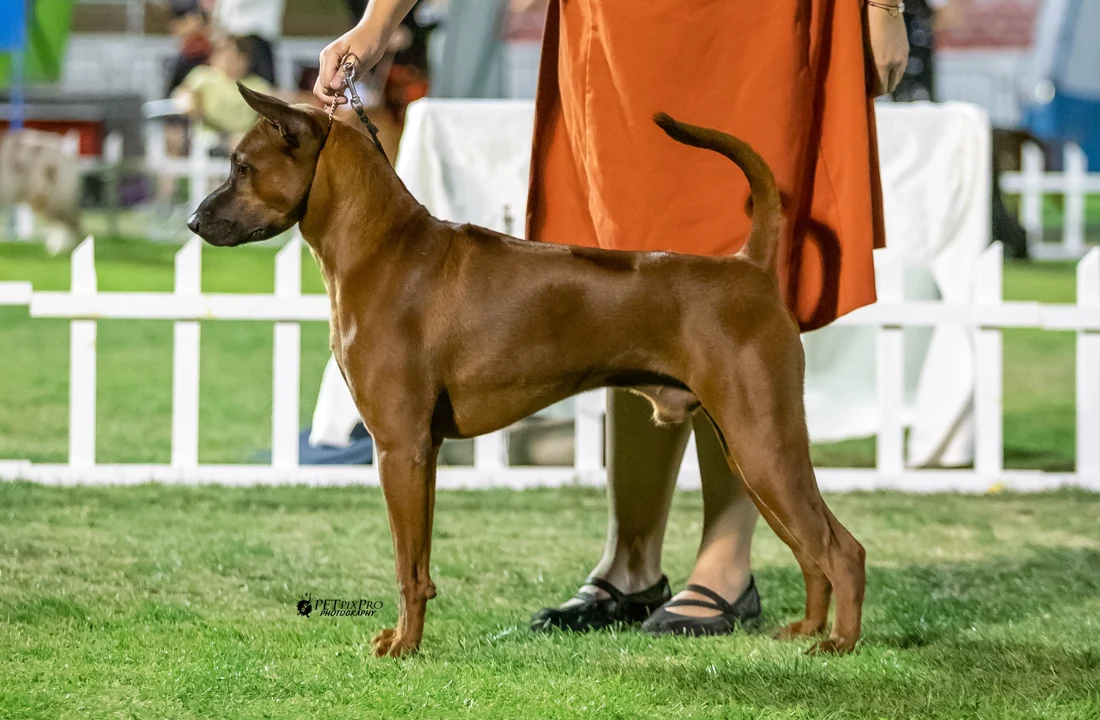
Why this breed stands out
Look along a Thai Ridgeback's spine and you will see its defining feature: a ridge formed by hair growing in the opposite direction to the surrounding coat. This is a natural coat pattern, not a haircut. The breed's background includes hunting, guarding and accompanying carts in eastern Thailand, while its international standard highlights considerable jumping ability. The ridge and that working history explain its place in this selection. At home, prospective owners should think beyond the short coat to secure exercise areas, training and everyday activity.
Sources: Breed reference 1 · Breed reference 2.
In Australia: availability and where to start
Current Australian breeder route not confirmed.
We could not verify a current Australian Thai Ridgeback breeder or litter in the sources checked. That is not proof that none exists, and older overseas or Australian advertisements should not be treated as current availability. The practical starting point is your state or territory Dogs Australia member body: ask about current breed contacts, registration and opportunities to meet a genuine Thai Ridgeback. Take care not to confuse this breed with the much more widely listed Rhodesian Ridgeback.
Start here: Dogs Australia state and territory contacts.
Availability sources checked: . Listings are enquiry routes, not endorsements or confirmation of a current litter.
Compare all ten breeds and read the breeder-checking checklist →
Origin: a working dog from Thailand
The Thai Ridgeback's history includes hunting, watching over homes and accompanying carts in eastern Thailand. Its name points to the ridge of hair along its back. The international breed standard describes a muscular, short-coated dog with an active outlook and notable jumping ability. FCI breed standard
Temperament: loyalty does not mean easy familiarity
The AKC describes an intelligent, independent breed that can be reserved with strangers and retain strong hunting instincts. These tendencies make careful introductions and sustained training important topics for prospective owners. Individual history and temperament matter: ask about the dog in front of you, rather than assuming every Ridgeback behaves alike. AKC breed guide
Care: put the effort into the day
The short coat generally calls for occasional brushing, with more attention during shedding. Activity and training deserve a bigger place in the schedule than grooming does. Discuss secure exercise spaces, visitor routines and management around smaller animals with an experienced breeder, rescue or qualified trainer. AKC care and training
Household fit: test your plan before committing
Walk through an ordinary week, not your most adventurous weekend. Who handles exercise when work runs late? Where could the dog rest away from visitors? What would you do if the dog did not enjoy the local off-lead park? Ask to observe adult dogs in everyday settings and discuss the support available after placement. First-time owners should be especially candid about their experience and access to skilled help. A striking appearance should not outweigh a mismatch between the dog's needs and what the household can realistically provide.
Health: ask about checks not promises
Ask the breeder and vet what examinations and records are available for hip health and dermoid sinus, the screening concerns raised in the AKC profile. Request an explanation of any findings and whether further assessment is appropriate for this dog. Avoid treating a reassuring phrase such as “healthy lines” as a substitute for records. AKC health information