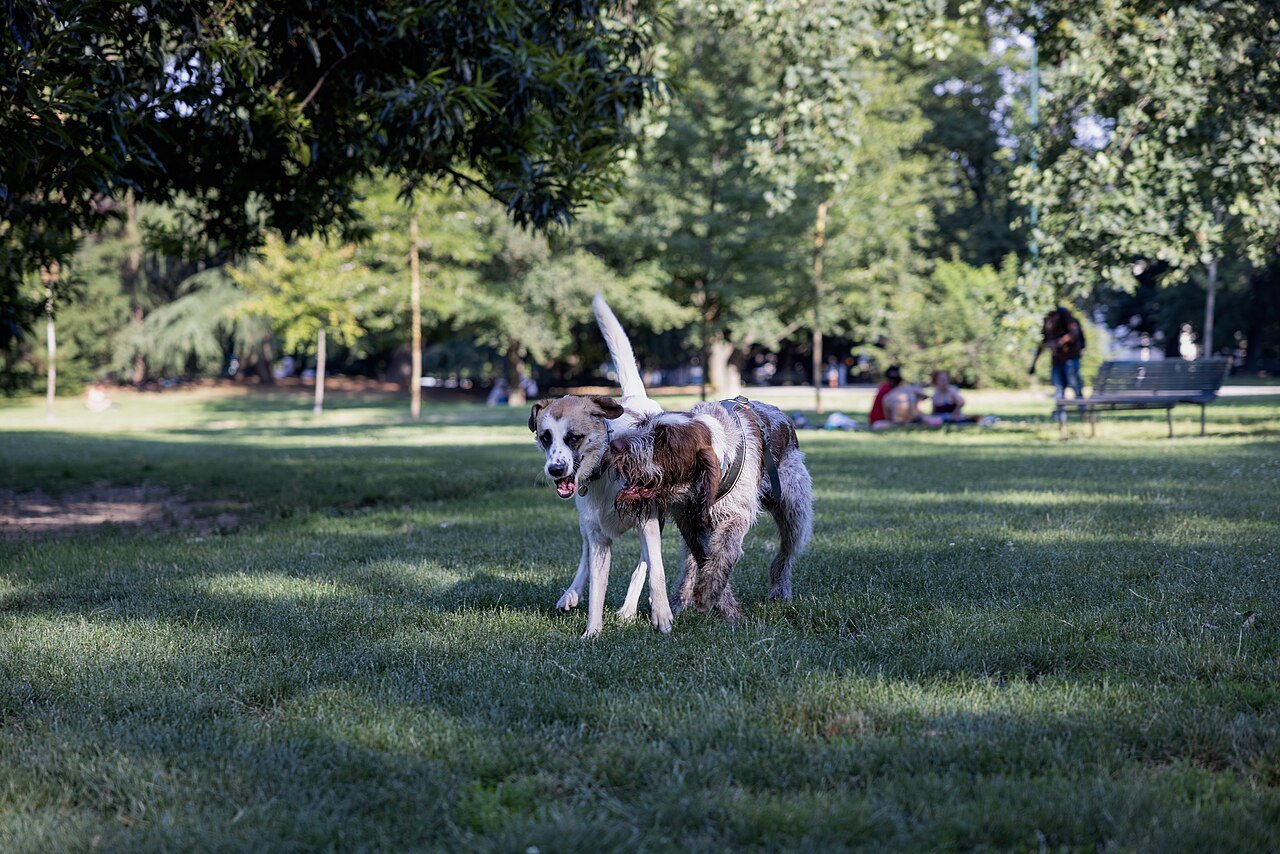
A dog park visit can mean a good sniff, a little play and a relaxed walk home. It can also become busy very quickly. Good etiquette starts with watching your own dog, giving others room and being willing to leave.
You do not need to stay for a set time, greet every dog or prove that your dog can handle a crowd. Here is a practical guide to sharing the space, from the gate to the trip home.
Check the rules before you unclip
Read the signs and check the council’s current park information. Off-leash permission may apply only to certain areas or times. Sports, playgrounds and nearby paths can have separate restrictions. Greater Dandenong, for example, lists specific distance requirements and requires dogs to be leashed when club or school sport is being played. Those are local rules, not a template for every Australian park. Greater Dandenong Council
Check entry requirements too, including any registration, vaccination, desexing or enclosure restrictions. Ask your vet about your individual dog’s health and readiness for shared dog spaces rather than relying on a universal puppy age. A dog who is unwell should sit this visit out.
Decide whether this visit suits your dog
Can your dog come back when called around distractions? Are they comfortable with unfamiliar dogs and people? Can you give them your attention throughout the visit?
Practise recall away from a busy park before relying on it there. If your dog is frightened by close approaches, repeatedly overwhelms others or cannot disengage, choose another activity while you work on those skills. A crowded off-leash park is a difficult place to begin.
Some dogs prefer an on-lead sniffing walk. Others enjoy familiar company but find a group of strangers too much. There is no need to make the dog park part of every dog’s routine. The City of Sydney explicitly recognises that some dogs do not enjoy off-leash parks and recommends walking on-leash instead. City of Sydney
Give everyone space at the gate
Pause outside and look in. If dogs are crowding the entrance, ask their people to call them away. You can wait or choose somewhere else.
Keep your dog on lead on the approach where required. In a double-gated entrance, wait until the transition area is empty, then close one gate before opening the next. Do not hold both open for the person behind you. Follow the park’s entry instructions and move into clear space rather than stopping for greetings at the gate.
Once inside, call your own dog away when someone arrives or leaves. A welcoming committee can feel very different to the dog trying to enter. ACT Government
Let greetings be optional
A dog who wants to sniff the grass does not need help making friends. Do not steer your dog towards another dog who is avoiding them, or encourage a worried dog to stay in the middle of the action.
If your dog stays pressed against your legs, tries to retreat or seems overwhelmed, help them leave the interaction. RSPCA South Australia advises against forcing a frightened dog to socialise. RSPCA South Australia
People get a choice too. Call your dog away from someone who does not want a greeting. “They’re friendly” is useful information, but it does not replace bringing your dog back.
A few simple phrases help:
- “We’re giving them a bit of space, thanks.”
- “Could you call your dog back? Mine needs a break.”
- “I’ll take mine away so yours can come through.”
Watch both dogs during play
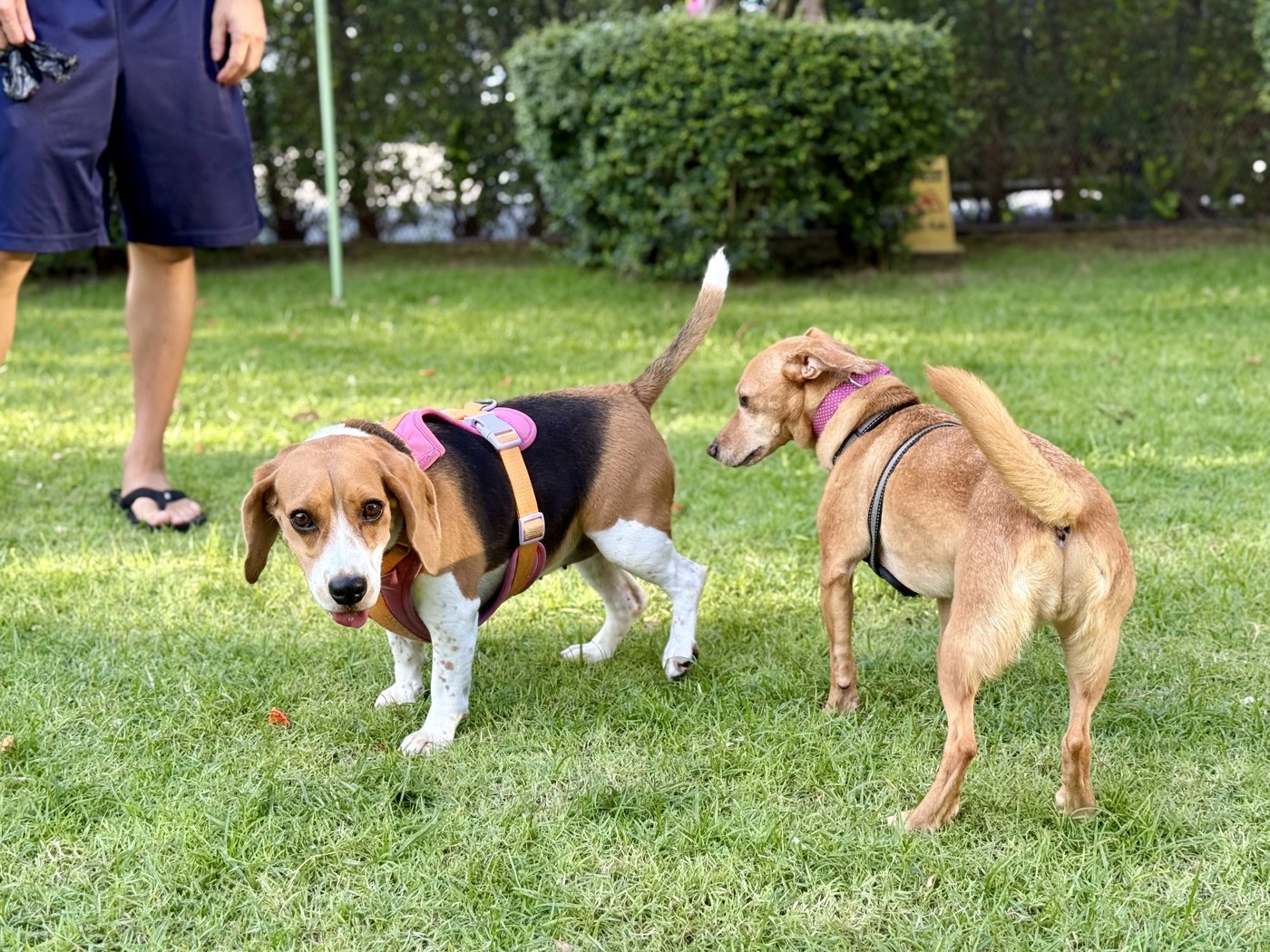
Watch the whole interaction, not just your dog’s enthusiasm. Loose, bouncy movement and pauses can be part of play. Stiffness, repeated attempts to move away or freezing are reasons to interrupt rather than assume everything is fine. A wagging tail alone does not tell you that a dog is happy; consider the rest of their body and what is happening around them. ASPCApro
Other signs that a dog may need space include a lowered body, tucked tail, ears held back and turning away. Look for the overall pattern rather than diagnosing a feeling from one movement. RSPCA Australia
If your dog keeps chasing one dog who is trying to get away, call yours out of the interaction. Take a quiet break away from the group. Do not send them straight back to the same dog. If the pattern restarts, leave.
Rough play does not have to become a fight before you act. Different play styles may simply be a poor match.
Keep food and favourite toys out of the mix
For a shared visit, the simplest approach is to leave balls, prized toys and chews at home. Another dog may want them, and your dog may not want to share. RSPCA South Australia warns that toys can create unwanted competition. Bring water, a bowl, your lead and poo bags instead. RSPCA South Australia
Food rules vary. Follow the park’s policy and avoid handing out treats to a gathering of unfamiliar dogs. Do not feed someone else’s dog without permission. If food rewards are important to your training, plan that session somewhere suitable rather than creating a crowd around your pocket. The ACT’s guidance specifically cautions against food or toys that cause problems. ACT Government
Keep watching and pick up the poo
Chatting is part of the pleasure, but keep your dog in view. Notice where they toilet, pick it up promptly and use the appropriate bin. Carry your own bags even when the park has a dispenser. Cleaning up is also a council requirement in places such as Greater Dandenong. Greater Dandenong Council
If children come along, check the local rules and supervise them closely. Help them give unfamiliar dogs room rather than hugging, chasing or crowding them. If supervising the children means you cannot watch your dog, choose a different outing. RSPCA guidance stresses supervision around dogs and teaching children safe interactions. RSPCA Knowledgebase
Leave before the visit gets difficult
Head out if your dog is repeatedly trying to escape an interaction, cannot settle after a break, or keeps overwhelming another dog. You can also leave simply because the park feels too busy. You do not need another owner’s agreement.
If your dog growls, create space rather than punishing the warning. RSPCA Knowledgebase
If a fight starts, do not put your hands between the dogs or attempt to physically pull them apart. Call your dog away if possible and keep other people clear. RSPCA Australia warns that physically separating fighting dogs risks further injuries. RSPCA Australia
For an ordinary departure, call your dog to you, follow the gate procedure and attach the lead before leaving the off-leash boundary. A short, comfortable visit is plenty. Tomorrow can be a different kind of walk.