A birthday or adoption anniversary is a lovely excuse to celebrate your dog. The best party does not need a towering cake: a familiar walk, some sniffing games and a little treat can make the day feel special.
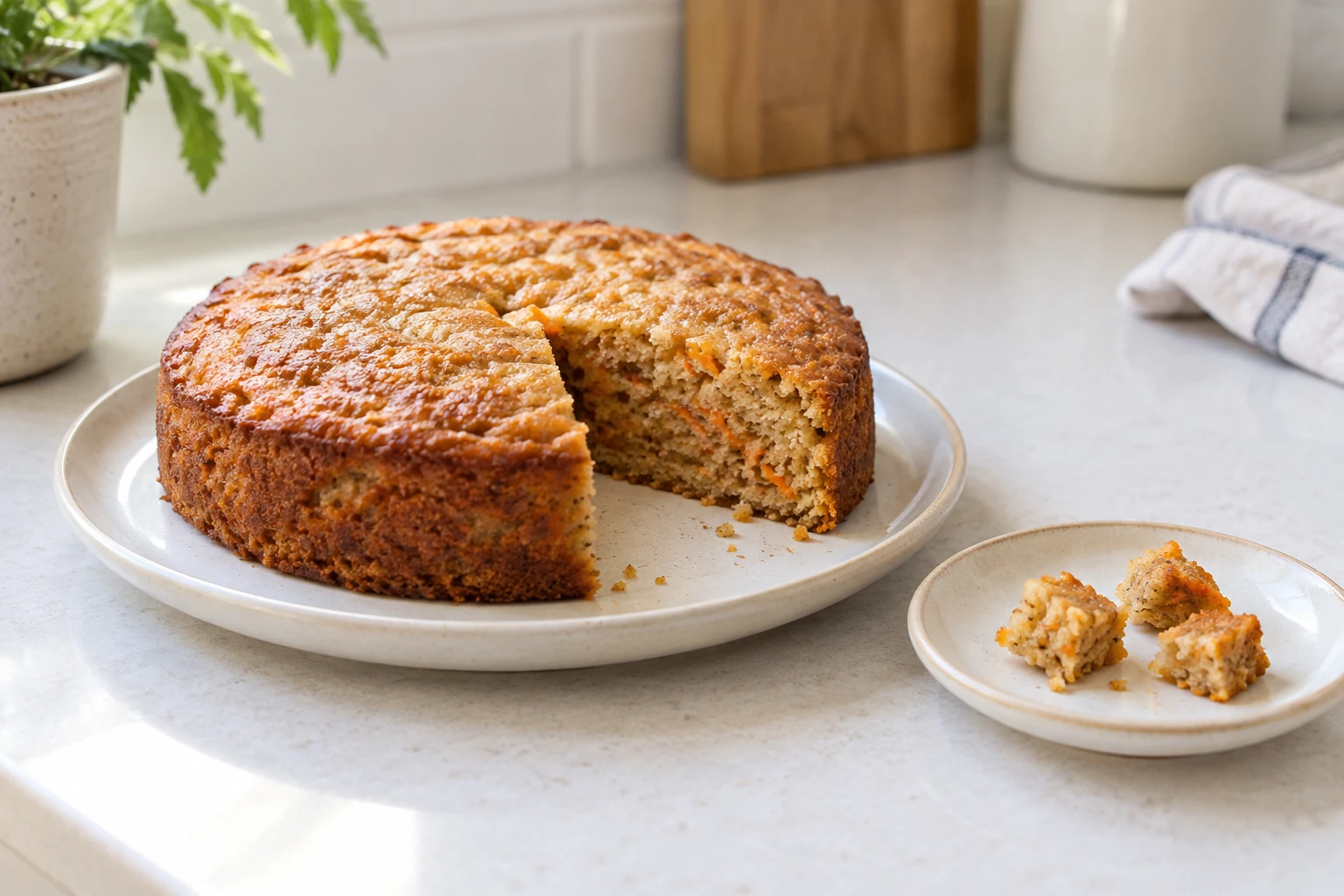
This banana-and-carrot cake is for an occasional celebration, not dinner. The recipe below follows the ingredient quantities and baking guidance in Battersea’s published dog birthday cake, with simpler decoration. Good Dog Questions has not kitchen-tested it. Oven performance and ingredient sizes vary, so check the centre rather than relying on the timer alone.
Before you choose a birthday treat
Use ingredients your dog already tolerates. If your dog has food allergies, diabetes, pancreatitis, an unsettled stomach or a veterinary-prescribed diet, ask your vet before offering this cake. A birthday is not a reason to interrupt a treatment plan. In particular, dogs with pancreatitis may need a therapeutic low-fat diet; this cake has not been formulated for that purpose. VCA explains why pancreatic disease needs individual dietary management.
A simpler celebration for a dog with dietary restrictions is to present a little of their approved food in a special bowl. The attention and time together matter more than the baking.
The recipe
Makes: one small cake, not one dog-sized serving. Tin: approximately 11cm round. Oven: 200°C/392°F. Allow 45–60 minutes for baking, plus preparation and cooling. These are the source recipe’s settings; it does not specify a fan-oven adjustment.
Ingredients
- 210g plain or wholemeal wheat flour
- 1 peeled banana, mashed
- Half a carrot, finely grated
- 2 teaspoons coconut oil, melted
- 250ml plain, unsweetened oat milk
- 1 egg, beaten
Weigh the flour rather than estimating by cups. Check the oat-milk ingredients: no sweeteners or added flavourings.
Method
- Heat the oven and line the tin with baking paper.
- Combine banana, carrot, egg, oil and oat milk; stir in flour.
- Transfer to the tin. Bake for 45–60 minutes, until cooked throughout. Expect a dense cake rather than a fluffy sponge.
- Cool completely before cutting. Serve plain; elaborate icing is unnecessary.
Check doneness and keep the kitchen clean
The middle should be set, with no wet batter on a clean skewer. Keep raw batter away from dogs and children: raw flour and egg should not be eaten. Wash hands, utensils and work surfaces after handling them. For an additional temperature check, the FDA’s guidance for egg dishes is at least 71°C/160°F in the centre; reaching that temperature does not replace checking that this cake is fully baked. FDA egg-safety guidance and cooking guidance.
How much birthday cake can a dog have?
There is no universal “one slice” serving. This recipe has no verified nutritional analysis, and Good Dog Questions has not kitchen-tested it. Cutting the cake into equal pieces does not establish that one piece is suitable for your dog.
WSAVA recommends keeping treats within 10% of daily calories. That is a ceiling, not an amount to aim for. Your veterinary team may advise a lower allowance or different treats for your dog.
Before serving:
- Count the other extras. Training rewards, chews, table scraps and food used to give medication all use the same day's treat allowance. Birthday cake is not a separate allowance.
- Check the dog's usual food plan. If you need a precisely measured treat, choose an approved option with calorie information rather than guessing a cake portion. For a prescription diet or medical restriction, follow your vet's advice; a little of the dog's approved food can be the celebration instead.
- Serve separately from the cake. Put a very small amount in the dog's bowl, cut into manageable bites, supervise eating and put the remainder away. A small-looking piece is not a guarantee that it fits the calorie allowance.
If more than one person is celebrating, nominate one person to hand out treats. This avoids everyone offering “just a little”. Keep the usual complete, balanced diet as the main food; the cake must not replace a meal. A favourite game or time together can be the rest of the birthday celebration.
What to leave off the cake
Skip chocolate, cocoa, grapes, raisins, macadamias and alcohol-containing decorations. Avoid rich buttercream and cream toppings. The ASPCA’s food-hazard guide explains why familiar human-party ingredients may be inappropriate for dogs.
Peanut butter is not needed here. If using it elsewhere, check every label for xylitol, including the names birch sugar and wood sugar. “Sugar-free” does not mean dog-friendly. Contact a vet immediately if your dog eats xylitol; do not wait for symptoms. FDA xylitol warning.
For the birthday photograph, keep candles, toothpicks, ribbons, wrappers and plastic toppers out of reach, and remove all non-food decorations before serving. A celebration does not need a lit candle beside an inquisitive nose.
Storing the leftovers
Treat this moist, egg-containing cake as perishable. Divide it into small portions so it cools promptly, cover and refrigerate or freeze within two hours. Keep the fridge below 5°C and use refrigerated portions within three days. These are general food-handling precautions, not laboratory shelf-life testing of this recipe. NSW Food Authority leftovers guidance.
Freeze surplus portions promptly in a labelled, sealed container. Thaw in the fridge rather than on the bench; do not return a dog’s licked leftovers to the shared container. If storage has been uncertain, discard the cake. Keeping the celebration small is kinder than trying to finish every crumb.