
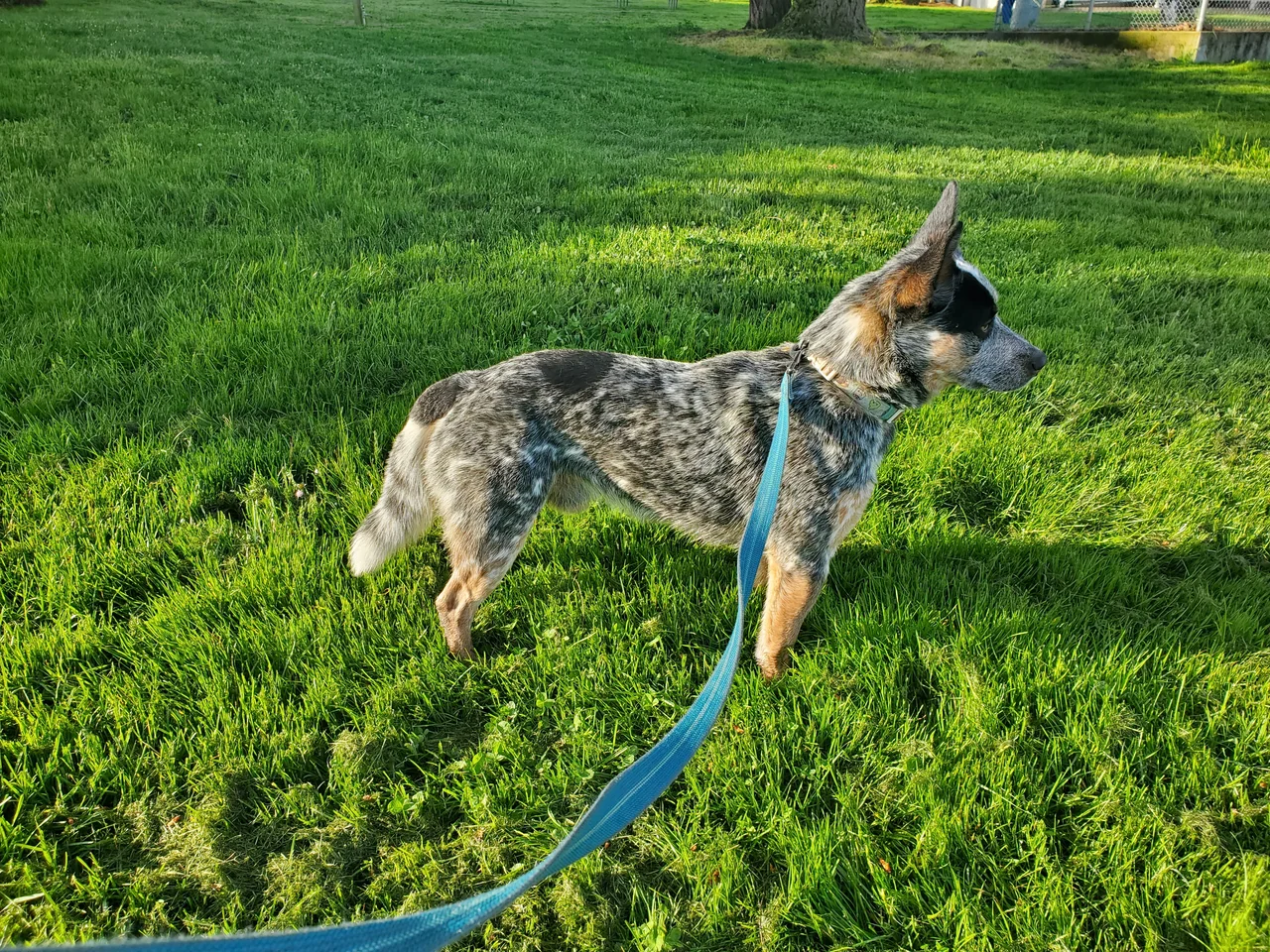
Built for cattle work, not an effortless pet
The Australian Cattle Dog—also called the Blue or Red Heeler—was developed in nineteenth-century Australia for demanding livestock work. Compact and athletic, it was selected for persistence rather than a quiet life waiting for an occasional weekend walk. Dogs Victoria breed profile
The nickname “Heeler” refers to a cattle-moving technique involving the animals' heels. In a household, chasing or nipping people is not something to accept as cute or inevitable. It calls for prevention, an alternative behaviour and appropriate help. Royal Kennel Club breed history
Temperament and household fit
Cattle Dogs are often watchful, intelligent and attached to familiar people; some are cautious about strangers. Those are tendencies, not a diagnosis of aggression or a guarantee of loyalty. Early experiences, health, breeding and the individual dog's learning history all matter. Dogs Victoria
For families, think beyond whether a dog “likes children”. Can adults supervise play, interrupt excitement early and keep a resting or eating dog undisturbed? Gates and separate spaces make that easier. A busy household with running toddlers may find a less intense individual a better match.
Compatibility with another dog or cat needs assessing separately. Arrange controlled introductions, provide escape spaces for cats and prevent rehearsed chasing. Do not use an uncontrolled dog-park encounter as a temperament test.
A small house can work only if the daily plan works. Secure outdoor access is useful, but a garden cannot provide all the activity and interaction an engaged working dog needs. Be honest about long absences and how much training you actually enjoy.
Give the brain a job
Offer varied walks, scent searches, cooperative games and short training sessions. Depending on the individual, rally, obedience or other suitable dog sports may provide satisfying shared activities. The aim is a dog whose needs are met, not a dog exhausted into silence.
Prioritise recall, calm greetings, walking without pulling and disengaging from movement. Use rewards and arrange situations in which the dog can succeed. Being physically robust is no reason to use force: veterinary behaviour guidance supports reward-based methods for ordinary training and behaviour problems. AVSAB humane training statement
Puppies need age-appropriate activity, not adult running programmes or repeated high jumps. Discuss safe exercise and socialisation with your vet while they are growing. RSPCA puppy exercise
Grooming and health
The short double coat needs regular brushing and sheds, sometimes substantially. Keep grooming sessions comfortable and include routine checks of nails, skin and ears. Dogs Victoria coat guidance
Ask a breeder about parental hip and elbow evaluations, eye examinations and relevant DNA testing, including prcd-PRA and primary lens luxation. Congenital deafness is another important discussion: a BAER test assesses hearing in each ear. Request results linked to the named dogs, not simply “vet checked” assurances. The American breed club's health statement is a useful checklist, not an Australian legal standard. Australian Cattle Dog Club of America health statement
Best fit: an involved owner who enjoys teaching practical skills and can manage an alert, active dog consistently. Choose another match if low effort is the priority.
Quick questions
Are Blue Heelers and Red Heelers different breeds? No. These names describe colour varieties of the Australian Cattle Dog.
Are Cattle Dogs good with children? Some are; careful individual matching, supervision and prevention of chasing matter more than the label.
Is a Cattle Dog easy to train? It can learn quickly, but intelligence does not replace clear teaching, suitable rewards or patient practice.
Sources consulted: Dogs Victoria Australian Cattle Dog; Royal Kennel Club Australian Cattle Dog; AVSAB humane training statement; RSPCA puppy exercise; Australian Cattle Dog Club of America health statement, linked above.