

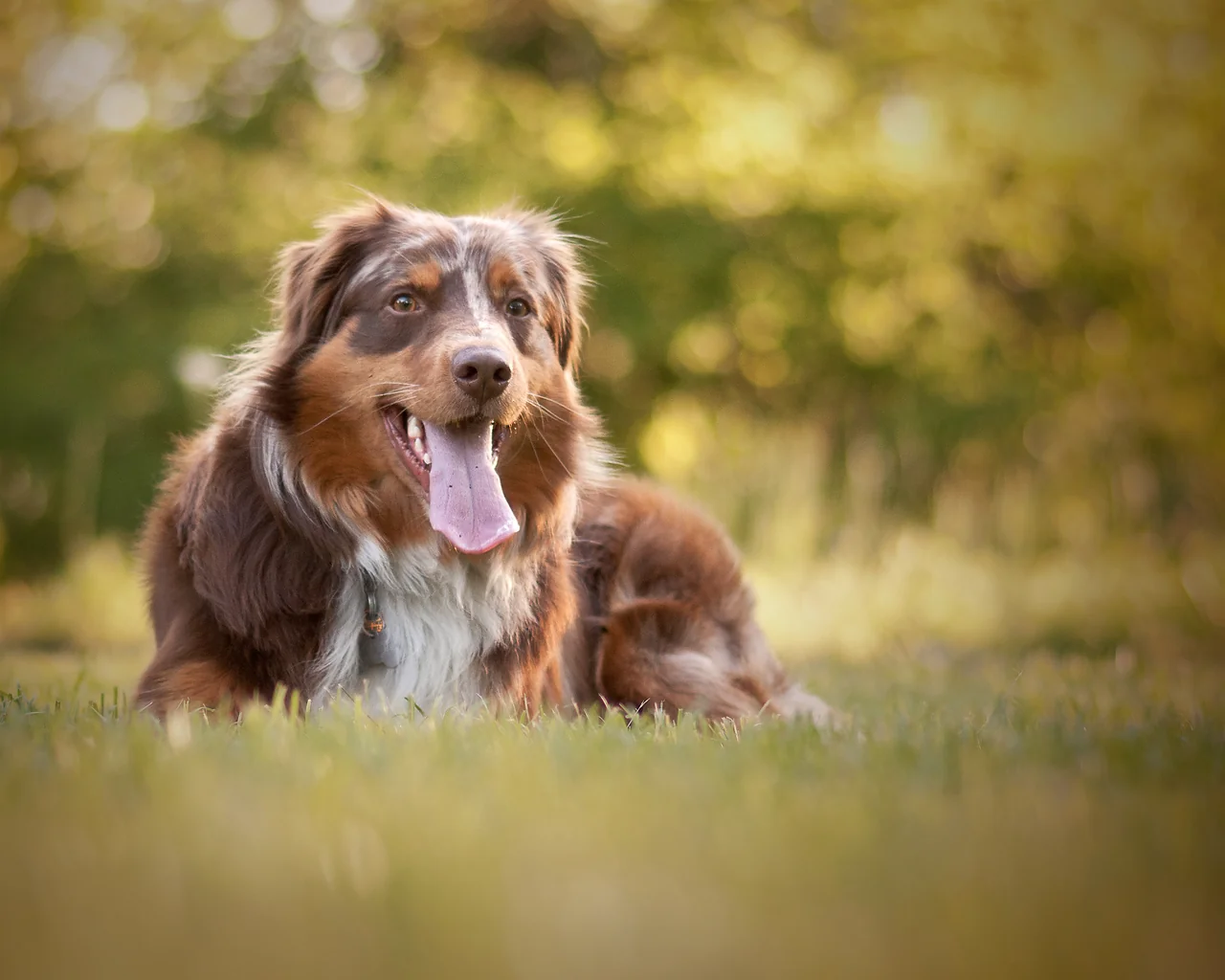
The name is Australian; the breed developed in America
The Australian Shepherd is a working herding dog developed in the United States, despite its name. Its striking coat can attract attention first, but the more important question is whether you want an active dog that needs to participate in daily life. DOGS NSW breed history
An Aussie is not a decorative alternative to a Border Collie. Choose the individual whose temperament and activity needs suit your household, not the coat pattern that looks best in photographs.
What is an Aussie like to live with?
Aussies are commonly described as intelligent, alert and devoted, with herding and guarding instincts. Some are reserved at first meetings. Drive varies—even within a litter—so meeting adult relatives and discussing how the breeder matches puppies is more useful than relying on a breed slogan. DOGS NSW temperament and suitability
Suburban life can suit an appropriately matched dog when its needs are met. Smaller homes need especially thoughtful plans for outdoor access, visitors, noise and quiet rest. Working from home helps only if you can genuinely provide breaks and interaction; being in the next room all day is not the same thing.
In families, supervise children and dogs together and provide a retreat away from play. Prevent running games becoming herding games. Introduce cats and other dogs gradually, using separate spaces where needed. No breed profile can promise that two particular animals will be comfortable together.
A satisfying routine is more than a long walk
Combine sniffing and exploring with learning: recall practice, finding hidden food, controlled toy games or a suitable sport. Build activities around the dog's age and condition rather than copying another owner's mileage. Budget time for an ordinary wet Tuesday, not just a sunny hiking weekend.
Teach calm greetings, comfortable handling and settling as deliberately as tricks. Reward useful choices, keep sessions manageable and avoid punishment-based shortcuts. The RSPCA supports training that builds desirable behaviour through positive reinforcement. RSPCA reward-based training
In hot weather, shorten or replace strenuous outings and provide a cool resting place and drinking water. A dog keen to continue is not proof that conditions are safe. RSPCA heatstroke prevention
Coat care and health conversations
Expect a double coat that sheds and needs regular brushing, with additional work during seasonal coat changes. Check feathered areas for tangles rather than only brushing the visible outer hair. DOGS NSW coat information
Ask to see parental hip and elbow results, eye examination records and relevant inherited-disease testing. Hereditary cataracts are among the breed's recognised concerns. Discuss family health history as well: no DNA panel rules out every future illness. Australian Shepherd Club of Victoria health resources and Australian Shepherd Health & Genetics Institute
MDR1/ABCB1 deserves particular attention. Some Aussies carry a variant associated with sensitivity to certain medicines. Ask your vet about testing and ensure the result is in the medical record; do not choose or stop medication based on an internet list. UC Davis Veterinary Genetics Laboratory
Best fit: someone who enjoys training, tolerates shedding and has a realistic daily plan for companionship and activity—not someone buying mainly for blue eyes or merle colouring.
Quick questions
Is the Australian Shepherd from Australia? The breed developed in America; its name does not identify its country of development.
Can an Aussie live in a small home? Possibly, if the individual and routine fit. Size alone cannot answer the question.
What should I ask about MDR1? Ask whether the dog has a documented result and discuss medication precautions with your veterinarian.
Sources consulted: DOGS NSW Australian Shepherd; RSPCA Australia reward-based training and heatstroke prevention; Australian Shepherd Club of Victoria health resources; Australian Shepherd Health & Genetics Institute disease FAQ; UC Davis Veterinary Genetics Laboratory MDR1 guidance, linked above.