

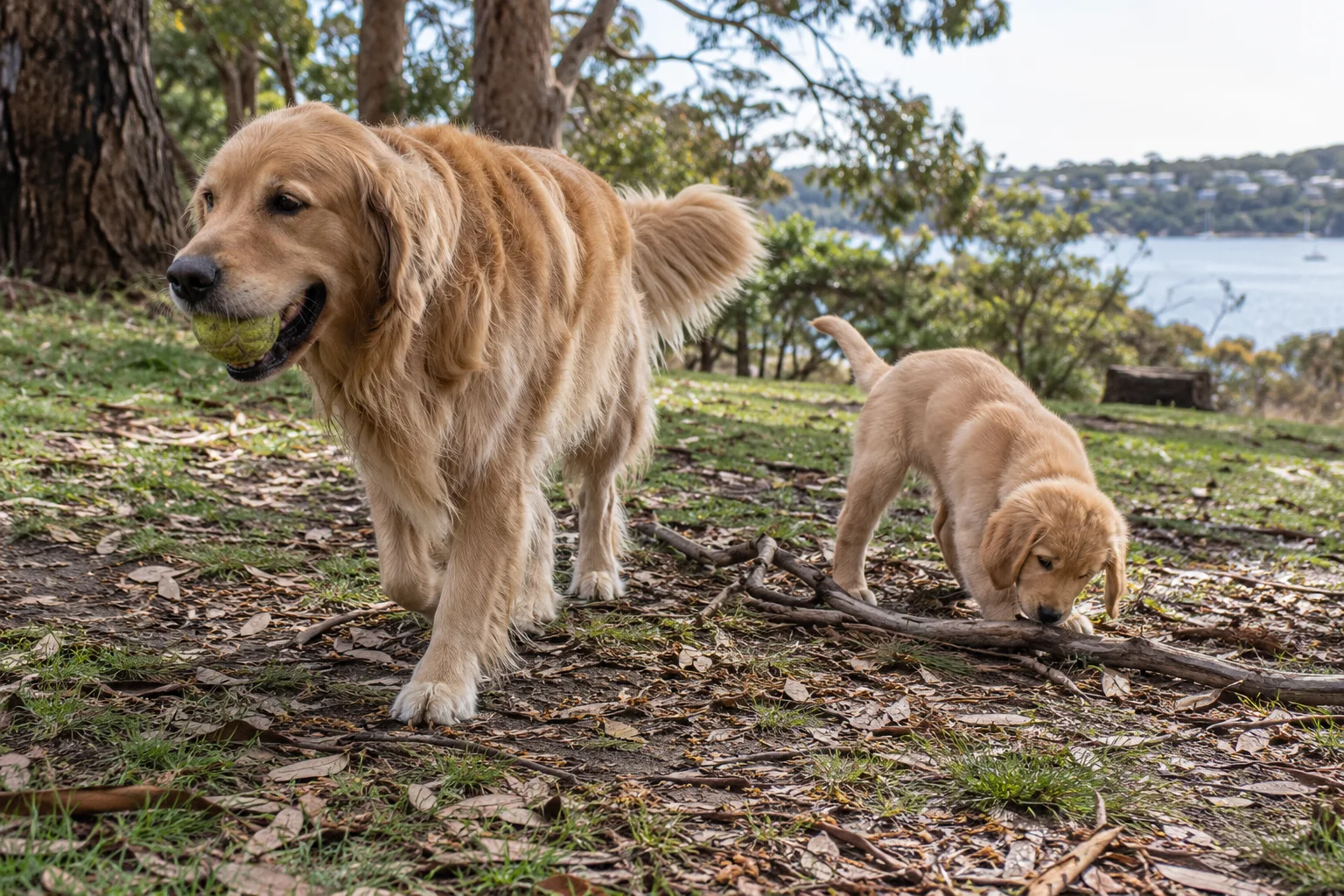
Meet the Golden Retriever, a dog who can make the arrival of a visitor feel like the main event of the week.
Everyone is apparently their friend
Plumber? Friend. Delivery driver? Potential friend. Someone who made eye contact across the park? Very promising. Individual dogs vary, but the breed’s famously sociable reputation is easy to recognise in many family Goldens.
Why are they carrying something?
There is a clue in the name: retriever. Goldens were developed to retrieve game. Many still enjoy carrying a toy, a ball, a sock, or an object you thought was safely put away. Give them appropriate things to carry and teach a friendly trade for items they should not have.
The coat comes with a cleaning schedule
That lovely coat needs regular grooming. Expect loose hair around the house, especially when the coat is shedding. Check skin and ears as part of normal care, and ask a vet or groomer for advice suited to your dog.
More than a beautiful face
A Golden needs suitable activity, training, company and mental engagement. Reward-based training can turn that enthusiasm into wonderful everyday manners. A family that enjoys spending time with its dog is likely to appreciate the breed far more than one hoping for a decorative sofa companion.
There may be fur on the furniture and a toy delivered to your feet. But when a Golden greets you as though coming home is the best news of the day, it is hard not to smile.
Check the fit with your household
Think beyond friendliness: who will provide exercise and toilet breaks, practise manners and deal with wet coats? A Golden may suit a family that enjoys including a dog in daily life, but no breed is guaranteed to be easy with children or comfortable alone. Meet adult dogs and ask how the individual behaves when excited, tired or left without company.
Teach a calm toy handover
Start with an ordinary toy your dog is happy to release. Offer a worthwhile reward, mark the release and return the toy when safe. Keeping the game cooperative helps avoid turning every stolen sock into a chase. If the dog freezes, growls or guards objects, stop reaching for them and get qualified help. A dangerous swallowed object needs veterinary advice, not a training session.
A practical grooming routine
Keep a brush near the dog's usual resting area and build short, rewarded grooming sessions. Check behind the ears, along the chest and in feathered hair for tangles or plant material. After wet outings, dry the coat and check for skin irritation. Do not cut close mats out with scissors against the skin; ask a groomer for help.
Combine grooming with a brief check of paws and nails. Pain, persistent scratching, ear odour or red skin should be assessed rather than treated by repeatedly changing shampoos.
Ask for health records, not reassurance alone
The Golden Retriever Club of Queensland describes screening for inherited problems involving hips, elbows, eyes and other systems. Ask a breeder which tests were done on both parents and request the actual reports. Discuss heart and relevant DNA screening as well. Tests reduce some risks; they do not guarantee that a puppy will never develop disease.
For a rescue dog, ask for available veterinary records and a realistic description of current needs. Make a budget for grooming and preventative care alongside food, training and emergency treatment.