

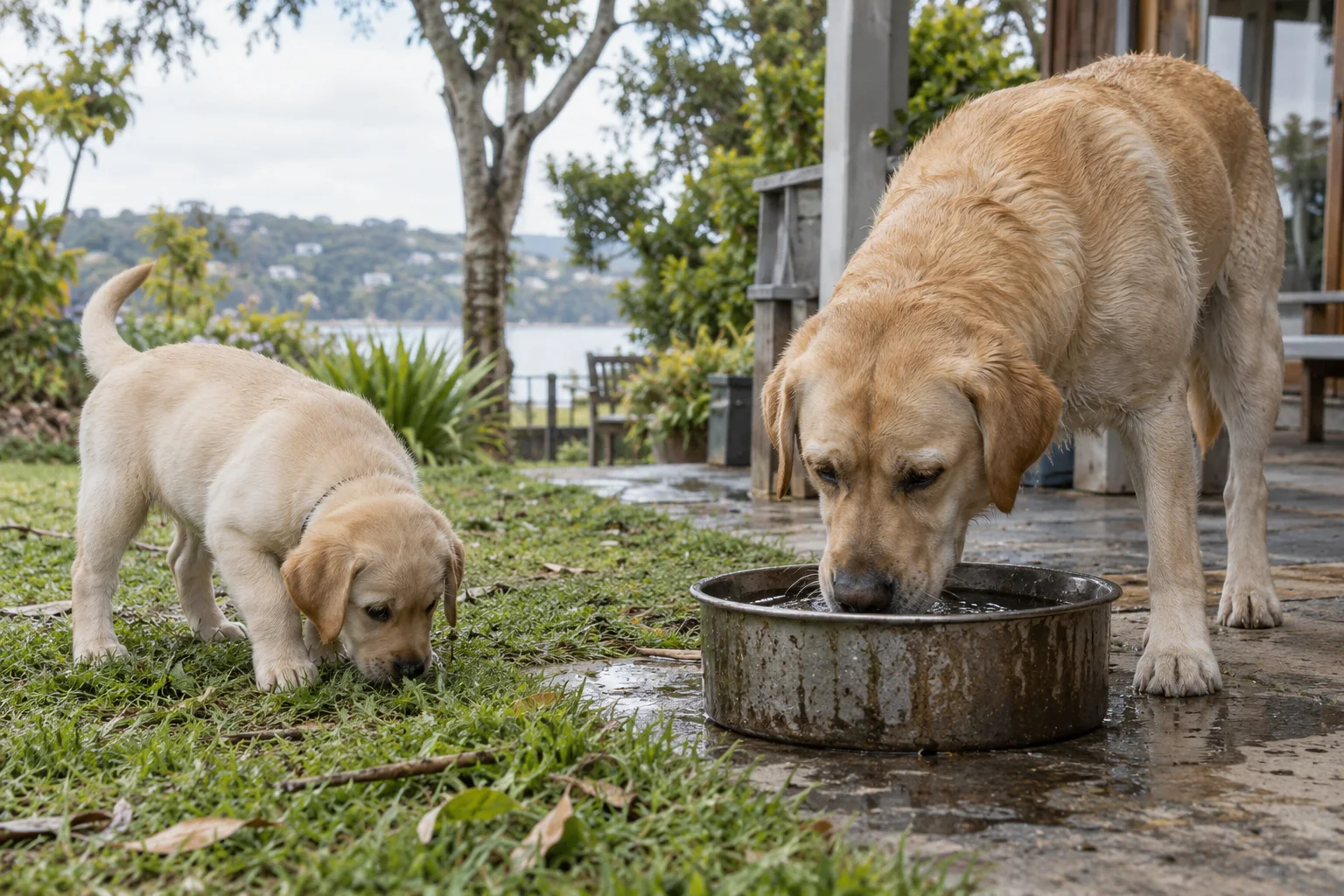
The Labrador Retriever has a gift for making a kitchen feel supervised. Turn around while preparing dinner and there they are, quietly calculating whether a piece of chicken might hit the floor.
The kitchen has a new supervisor
Many Labradors are enthusiastic about food, which can be useful in reward-based training. Portion control matters too. Use some of the daily food allowance for training and ask your veterinarian about healthy body condition for your dog.
Why do they carry everything?
Labradors were bred as retrievers and many enjoy fetching and carrying. Balls, toys and slippers can all become part of the inventory. Teaching “drop” through a calm trade helps keep play pleasant and protects your belongings.
Water is an invitation
Many Labs enjoy swimming and splashing, whether the water is a sparkling pool or the muddiest puddle in the park. Supervise around water and choose activity that suits your individual dog.
The whole-body welcome
A Labrador can bring energy, affection and a spectacular tail wag into family life. They also need training, suitable exercise, enrichment and time with their people. Plan for the adult dog, not only the adorable puppy.
You may lose a sock, clean muddy footprints and learn to put dinner out of reach. You may also have a dog who makes an ordinary Tuesday feel like a celebration.
What a workable day can look like
Plan a mix of suitable walking, sniffing, training and rest rather than relying on the backyard to provide everything. For a healthy adult, a cool-weather outing, a short retrieving game and a few minutes of manners practice can be parts of the day. The duration should suit the individual; puppies, older dogs and dogs with joint problems need different plans.
Set aside training food from the day's ration before anyone starts handing out extras. A shared treat container helps the family avoid feeding the same allowance several times. Weigh food instead of relying on a scoop of uncertain size, and ask the vet to assess body condition.
Practise greetings before guests arrive
Reward four paws on the floor during quiet practice with a family member. Give the dog space behind a secure gate when visitors arrive, then allow a calm greeting when manageable. A sociable reputation does not prevent a strong, excited adolescent from knocking over a child. Supervise children and dogs and give the dog an undisturbed retreat.
Coat and water care
The short coat still sheds and benefits from regular brushing. Check ears and skin during grooming and ask your vet about cleaning if there is odour, redness or discomfort. Supervise swimming, show the dog a safe exit and do not assume enthusiasm means competent swimming in every setting.
Questions for a breeder or rescue
For a puppy, ask to see the parents' hip and elbow assessments and relevant eye and DNA testing, with an explanation of the results. A statement that a puppy has been “vet checked” is not the same as parental health screening. For an adult rescue, ask about health history, behaviour around food, comfort alone and the level of support during settling in.
Budget for training, food, parasite prevention and unexpected care as well as the purchase or adoption fee.