
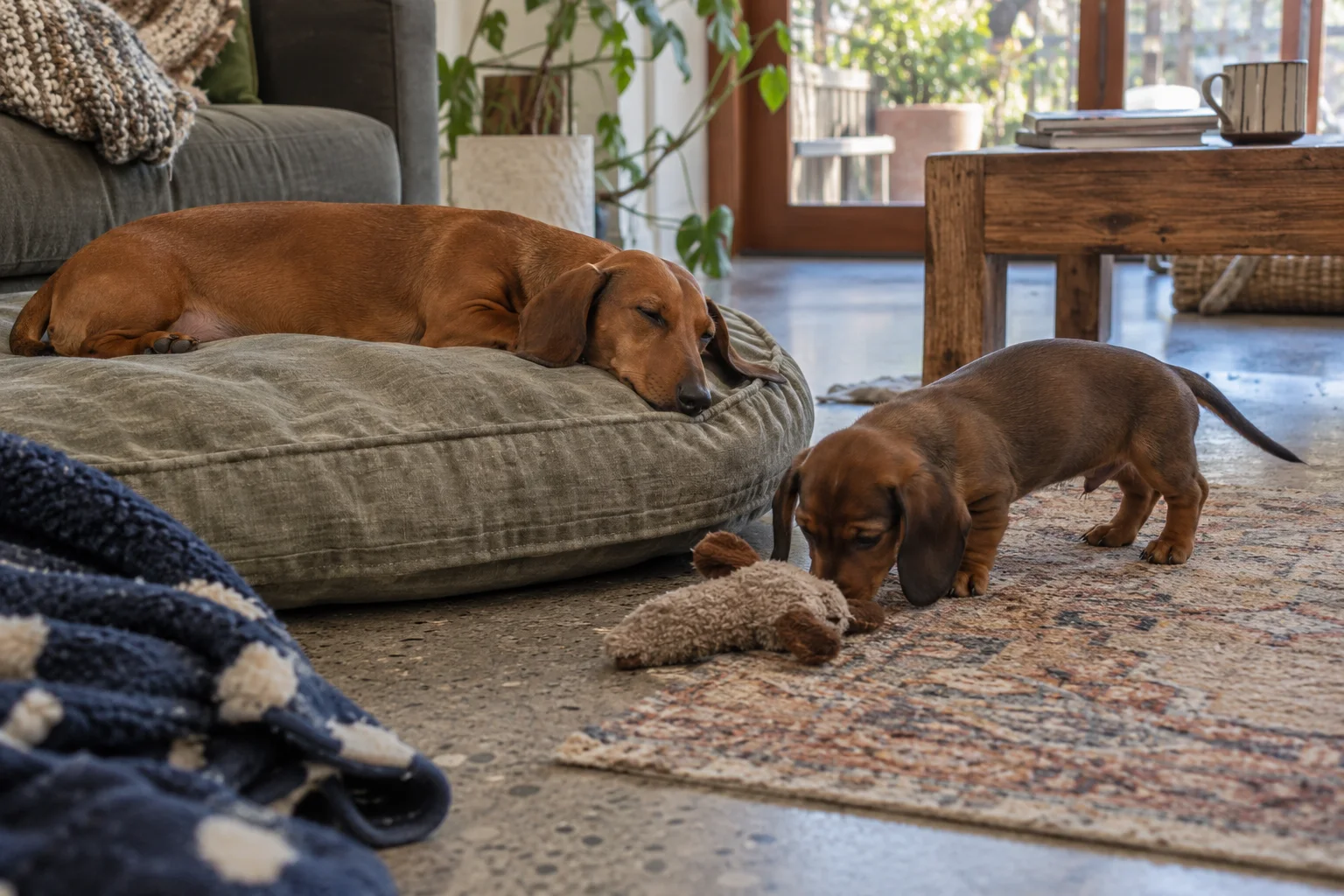
One minute they are a little sausage under the doona. The next they are at the window, announcing that somebody had the audacity to walk past their house.
They were bred to be brave
Dachshunds have a history as working dogs. Their long bodies and short legs helped them work close to the ground and enter burrows. Determination and independence were useful qualities then. At home today, those same traits can show up as curiosity and persistence.
The great disappearing act
Can’t find the dog? Check the blanket. Then the cushions. Then the pile of laundry you were certain was empty. A cosy, covered place appeals to many dachshunds. Always check before you sit down.
Small dog, serious security department
A suspicious sound may activate the household alarm. Is it an intruder? No. It is Australia Post. Rather than treating every bark as defiance, notice what sets it off and reward the quiet behaviour you want to see.
Clever? Absolutely. Cooperative? Let’s discuss.
Dachshunds can learn quickly, especially when training is clear and rewarding. Short, consistent sessions can be much more productive than a battle of wills. It is also possible that the little stare you interpret as a request for chicken is, in fact, a highly effective training method.
Look after that long back
The breed’s distinctive shape is part of its appeal. Keep your dog in healthy body condition and ask your veterinarian about exercise and any back concerns for your individual dog. If your dog develops pain, weakness or trouble walking, seek veterinary care promptly.
They are affectionate, funny, determined and occasionally exhausting. And once you have lived with one, getting a second starts to sound perfectly reasonable.
Turn the personality into a workable daily routine
A useful household plan makes room for sniffing, learning and uninterrupted sleep. Try a short sniffing outing during a cool part of the day, a few minutes practising one familiar skill, and quiet rest afterward. Adjust the activity to age, fitness and veterinary advice. An energetic dog does not necessarily need a longer, faster walk every time; searching for a few pieces of their usual food in a safe area can give their nose a job.
Three skills that make daily life easier
- Come when called: begin indoors, reward arriving and practise before expecting success around wildlife. Use secure fencing or a lead outside.
- Trade: offer an appropriate reward for releasing a harmless toy. Avoid chasing a dog with a stolen item; the chase can become the best part of the game.
- Settle: reward choosing a mat while you are nearby, then build up ordinary distractions gradually.
These are household practice ideas, not a promise that all dachshunds enjoy the same activities. Observe what your individual dog finds rewarding.
Questions to ask before getting one
Who will provide toilet breaks? Can your household manage alert barking without punishment? Is there money for routine and unexpected veterinary care? Can children respect a resting dog? Meet adult dogs as well as puppies before deciding.
Dachshund Health UK identifies intervertebral disc disease as a major breed concern. Ask a veterinarian about maintaining fitness and recognising early problems. Do not interpret reluctance to move as stubbornness or assume a ramp makes back problems impossible. Sudden weakness, dragging feet or inability to stand warrants urgent care.