

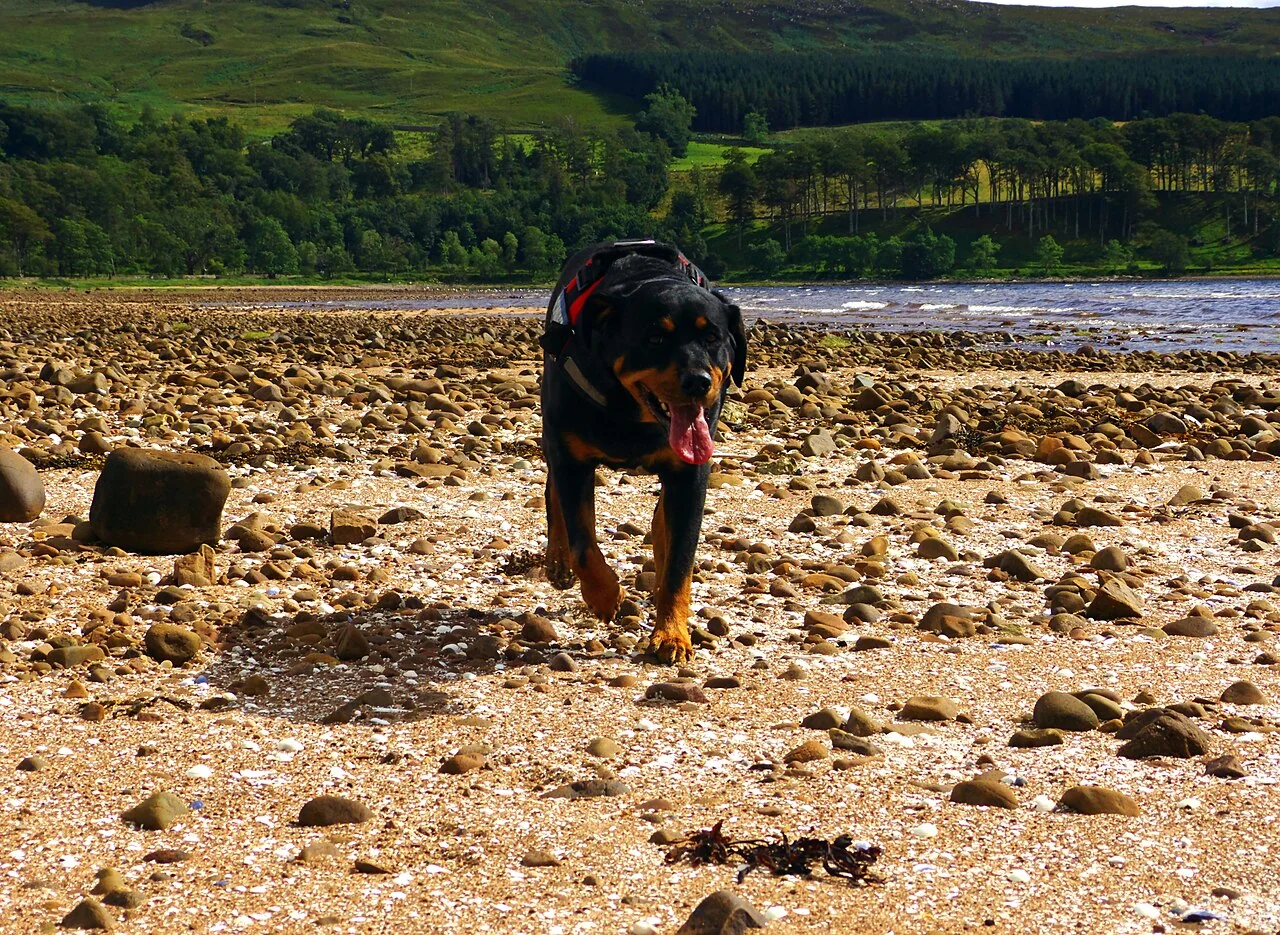
A well-matched Rottweiler can be an affectionate, engaging companion. This is not a low-effort choice. Its strength means ordinary skills—walking politely, greeting calmly and accepting handling—deserve attention from the beginning.
A working history beyond guarding
Associated with the German town of Rottweil, the breed worked with cattle and helped butchers transport goods. Guarding and later police work also form part of its history. In Australia, the Rottweiler belongs to the Utility group; it appears in this series because of that working heritage, not because every featured breed shares an official group. Dogs Victoria breed profile
Many Rottweilers are strongly attached to their families and more measured around unfamiliar people. Do not mistake reserve for a reason to encourage suspicion, or assume an outgoing puppy will greet everyone identically as an adult. Individual temperament, health, early experiences and continuing care all influence behaviour. VCA breed overview
Train for ordinary life
Use reward-based training, not attempts to prove who is “boss”. Teach a relaxed response to visitors, comfortable equipment use, trading objects and settling away from activity. Start in easy settings before adding distractions. The humane principle is the same as for a smaller dog: reward useful choices and arrange situations so the dog can succeed. RSPCA Victoria training guidance
Make training an ongoing shared activity rather than a puppy-school certificate you file away. The National Rottweiler Council Australia warns that the breed is not suited to being left in a yard without stimulation. Walks, sniffing, short learning sessions and suitable games give you more ways to meet its needs than simply trying to exhaust it. National Rottweiler Council Australia
Match activity to the dog's age and health, and ask your vet about safe progression for a growing youngster. A capable adult and a rapidly growing puppy should not have identical exercise plans.
Family, pets and home size
A Rottweiler may live well with children, but affectionate behaviour does not remove the need for active supervision. Plan gates or separate resting spaces, teach respectful interaction and do not make a child responsible for controlling a powerful dog. Other-dog and pet compatibility varies; introductions should be deliberate rather than a test of whether the dogs will “sort it out”. VCA household guidance
A small house is not automatically disqualifying. The harder questions are whether you have safe access outdoors, room to separate dogs and visitors, and enough daily time. An adult with a well-described foster history may offer clearer information about these practical needs than a puppy's looks.
Grooming and health checks
The short double coat is comparatively straightforward: regular brushing, more attention during shedding, and bathing when needed. Include nail, dental and skin care rather than treating a short coat as maintenance-free. Dogs Victoria coat-care guidance
Ask to see hip and elbow screening results and discuss JLPP, an inherited neurological disorder, with the breeder. Heart and eye assessments also feature in the American breed club's screening guidance. Ask your Australian breed club and vet which tests are appropriate and how to interpret the actual results; “DNA tested” alone is not enough information. Australian health information, American Rottweiler Club health guidance
These checks cannot rule out every illness. New pain, lameness or changes in activity warrant veterinary assessment, not an assumption that they are simply normal for a large dog.
Quick questions
Are Rottweilers suitable for first-time owners? Possibly with preparation and skilled support, but their strength leaves less room for unmanaged habits. Choose for temperament and support, not appearance.
Do Rottweilers need harsh training? No. Consistent, reward-based teaching and sensible management are the appropriate foundations.
Can a Rottweiler live with another dog? Some can; compatibility is individual. Seek informed introductions and have separate spaces available.
Best fit: Best for someone willing to make training, companionship and responsible management part of everyday life—not someone seeking a dog to leave outside as security.