

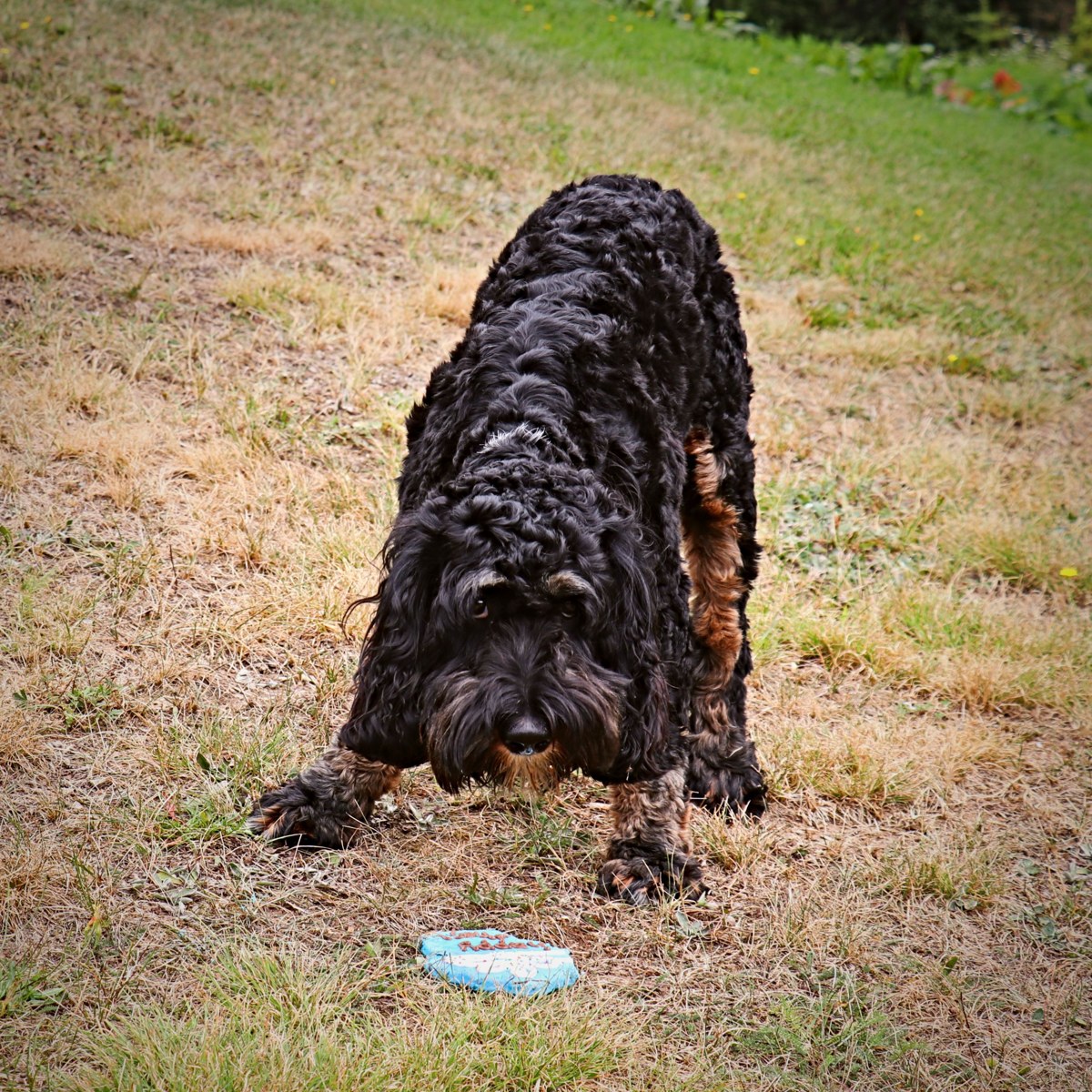

Cockapoo and Spoodle are names commonly used for a Cocker Spaniel–Poodle cross. If you are attracted by the friendly face and curly coat, ask a second question: what sort of daily life can you offer a dog with these parents? A crossbreed name gives useful clues, but it does not tell you how much training, grooming or company an individual will need.
Ask exactly which parents are involved
Find out whether the Cocker ancestry is English or American, which Poodle variety was used and whether either parent is already crossbred. Where relevant, ask about working or show ancestry rather than treating every Cocker as interchangeable. Those details are more informative than a seller's simple “small family dog” description.
Adult size can vary. Meet the parents where possible and ask about adult offspring from earlier litters, without treating them as a precise forecast. Choose equipment, transport arrangements and accommodation with room for the estimate to be wrong.
An engaged companion needs a workable routine
For a playful, curious individual, sniffing walks, searching for a toy and short training games can make ordinary days interesting. Teach calm behaviour as deliberately as active play. A household that expects a dog to entertain itself in the garden may be surprised by how much involvement it actually needs.
Start with recall, loose-lead walking, handling and settling. Set up comfortable rest periods and practise brief absences gradually. Reward-based sessions can be short enough to fit around family life; consistency matters more than making every session an event. When children are involved, adults should manage the interactions rather than assuming a familiar crossbreed name makes a dog automatically patient.
Budget for the coat you get
Some coats are curlier than others, and shedding is variable. A woolly appearance is not proof that a dog will suit someone with allergies. AAAAI's allergy guidance is clear that truly hypoallergenic breeds do not exist.
Arrange a practical grooming demonstration: which brush and comb suit this dog, how to work gently through the coat, and how frequently professional appointments are likely to be needed. Check the areas your groomer identifies as prone to tangles instead of only smoothing the visible surface. Include grooming in your monthly budget before bringing the dog home.
Health paperwork: both sides count
For English Cocker ancestry, the Cocker Spaniel Breed Council describes eye assessments, hip screening and relevant DNA testing. Ask for the actual reports, and ask your veterinarian how those recommendations apply to the proposed parents. American Cocker ancestry needs its own appropriate assessment rather than assuming the same checklist covers everything.
The Poodle parent's variety also matters; consult the Poodle Club of America's screening guidance. Ear discomfort, repeated scratching or changes in movement deserve veterinary attention, not a casual assumption that they are normal for a curly-coated dog.
Good reasons to choose—and reasons to pause
A particular Cockapoo may be a good match for an engaged household prepared for exercise, training, grooming and company. Pause if the appeal rests entirely on “easy first dog”, “never sheds” or “healthier because it is a cross”. Meet individuals, compare their needs and ask about rescue or rehoming options. An attractive coat should never be the whole decision.